Terbol
Proyecto: Oficinas y Comedor Terbol
Tipo: Oficinas y Comedor
Año: 2019
Estado: Proyecto Ejecutivo / Entregado
Área: 1200 m²
Ubicación: Santa Cruz – Doble Via a la Guardia
Cliente: TERBOL
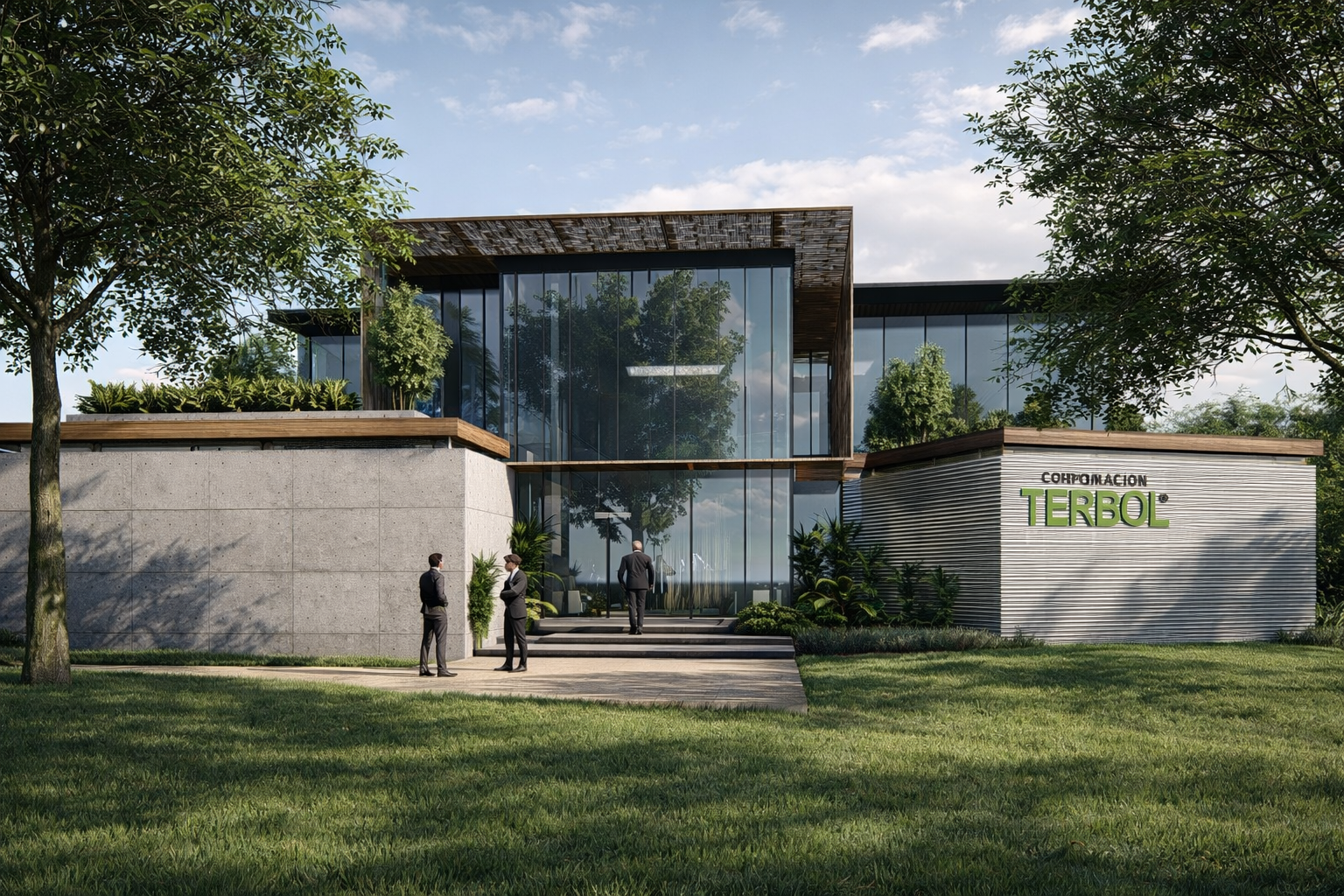
he TERBOL Administrative Building serves as the central office for the pharmaceutical company TERBOL. The project was developed within the same property where the main factory is located, along the avenue Doble Vía La Guardia in Santa Cruz de la Sierra, Bolivia. Positioned approximately 50 meters from the existing industrial facilities, the building occupies a section of the site characterized by abundant vegetation, mature trees, and a moderately irregular topography with noticeable level changes. Instead of altering the natural conditions of the land, the project carefully responds to them. The design respects the existing landscape and aims to integrate the building within its environment rather than dominate it. This approach allowed the architects to preserve much of the natural greenery while creating a functional administrative space connected to the company’s operational facilities.
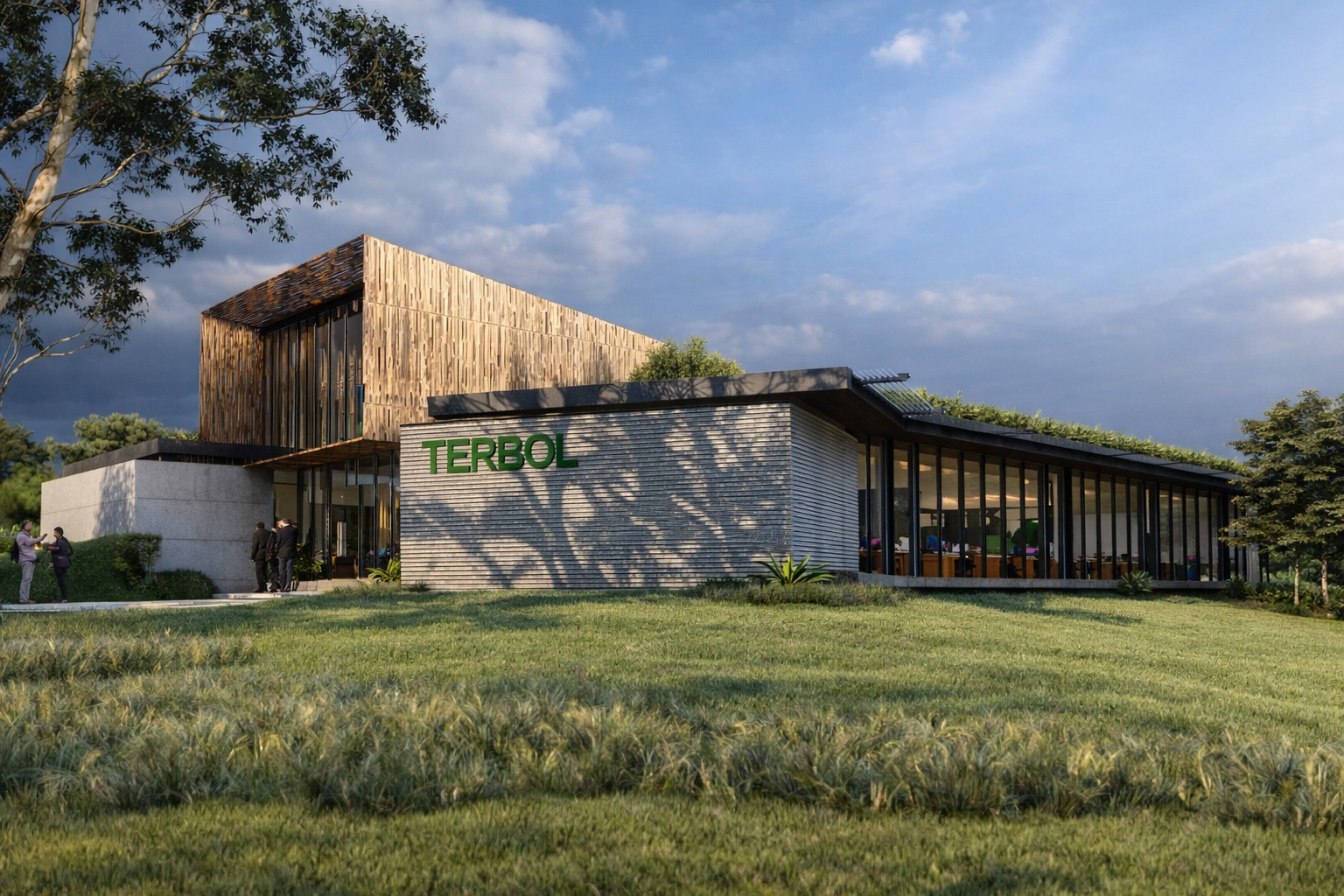
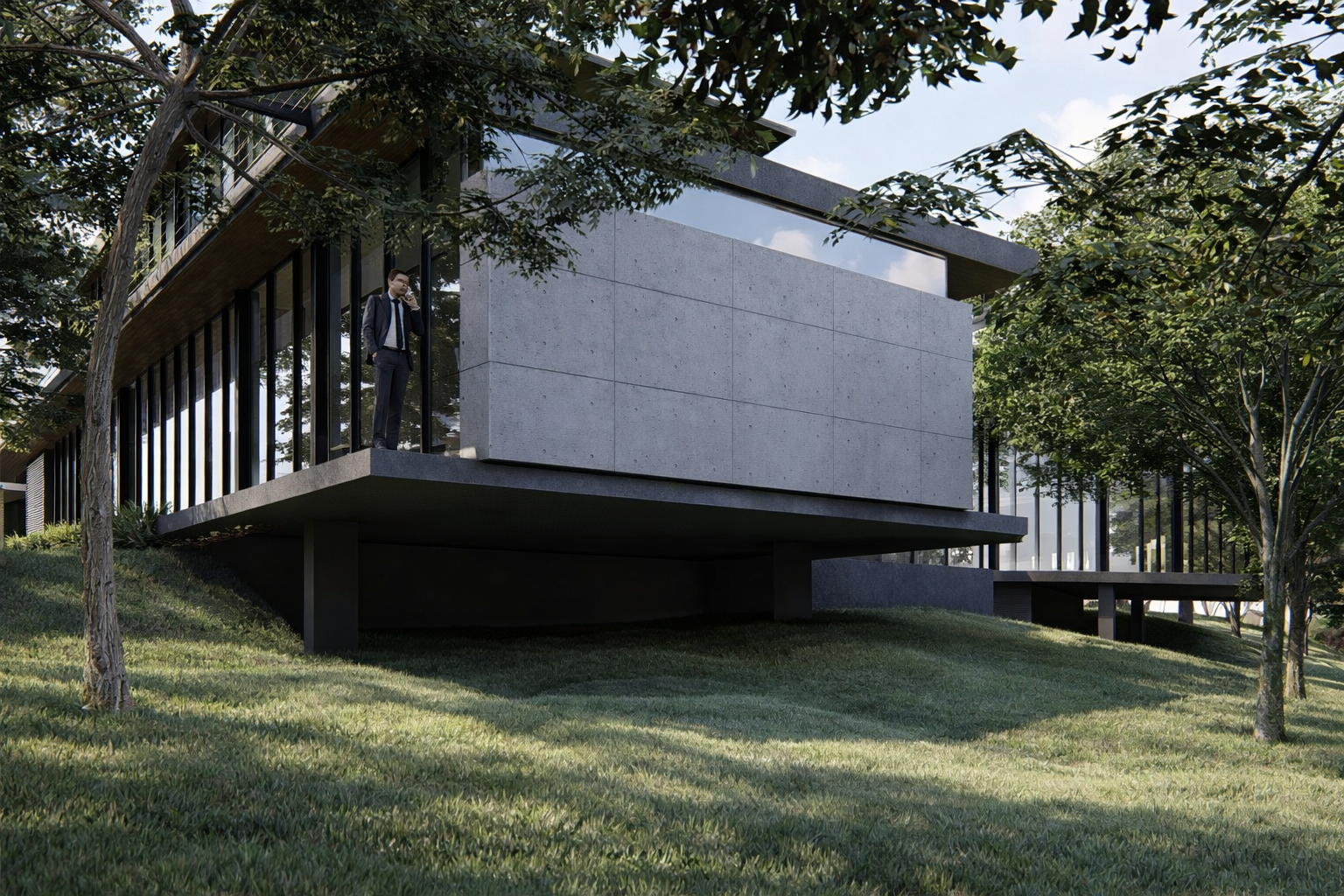
The central concept of the project was to create an architectural design that integrates closely with nature. To achieve this objective, the architects proposed a fully open floor plan that allows vegetation to penetrate the interior of the building. Rather than a compact layout, the building is organized around a sequence of patios, voids, and open spaces that introduce gardens directly into the architectural composition. These green areas function as spatial connectors between different working areas and help blur the boundary between interior and exterior environments. The presence of internal gardens creates a more comfortable atmosphere for employees while reinforcing the idea that the building should coexist with its natural surroundings. Through this strategy, the architecture becomes an extension of the landscape rather than a structure isolated from it.
Vegetation enters the building in multiple ways throughout the design. In some areas, patios are inserted directly within the office spaces, allowing trees and gardens to become part of the working environment. In other zones, large voids function as central planters that organize circulation and create visual connections between different sections of the building. These openings are not only aesthetic features but also play an important environmental role. The patios and voids allow natural airflow to pass through the building, creating cross ventilation that helps cool the interior spaces naturally. At the same time, employees benefit from constant visual contact with greenery and natural light. The result is a healthier and more pleasant workspace where architecture, climate, and landscape operate together.
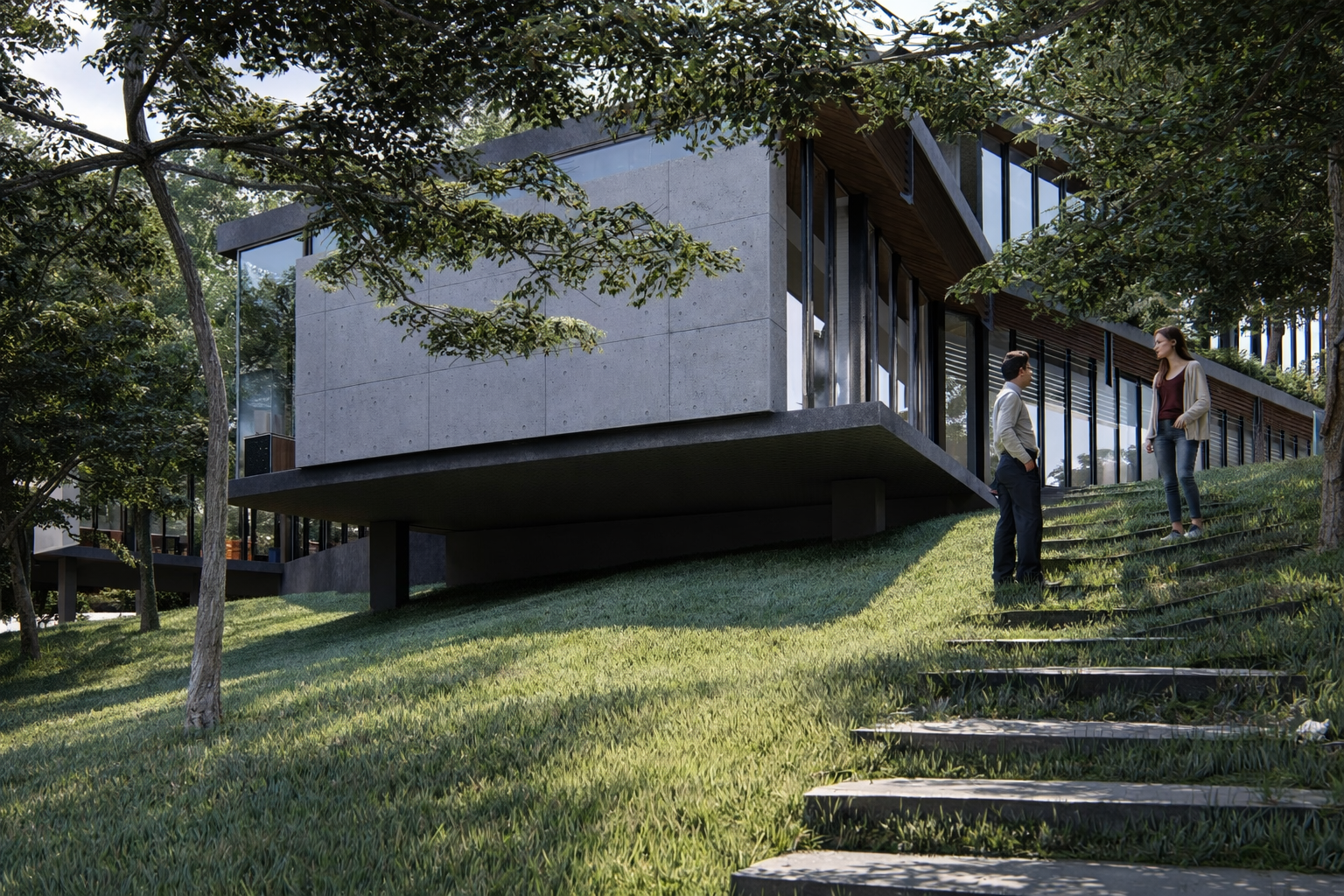
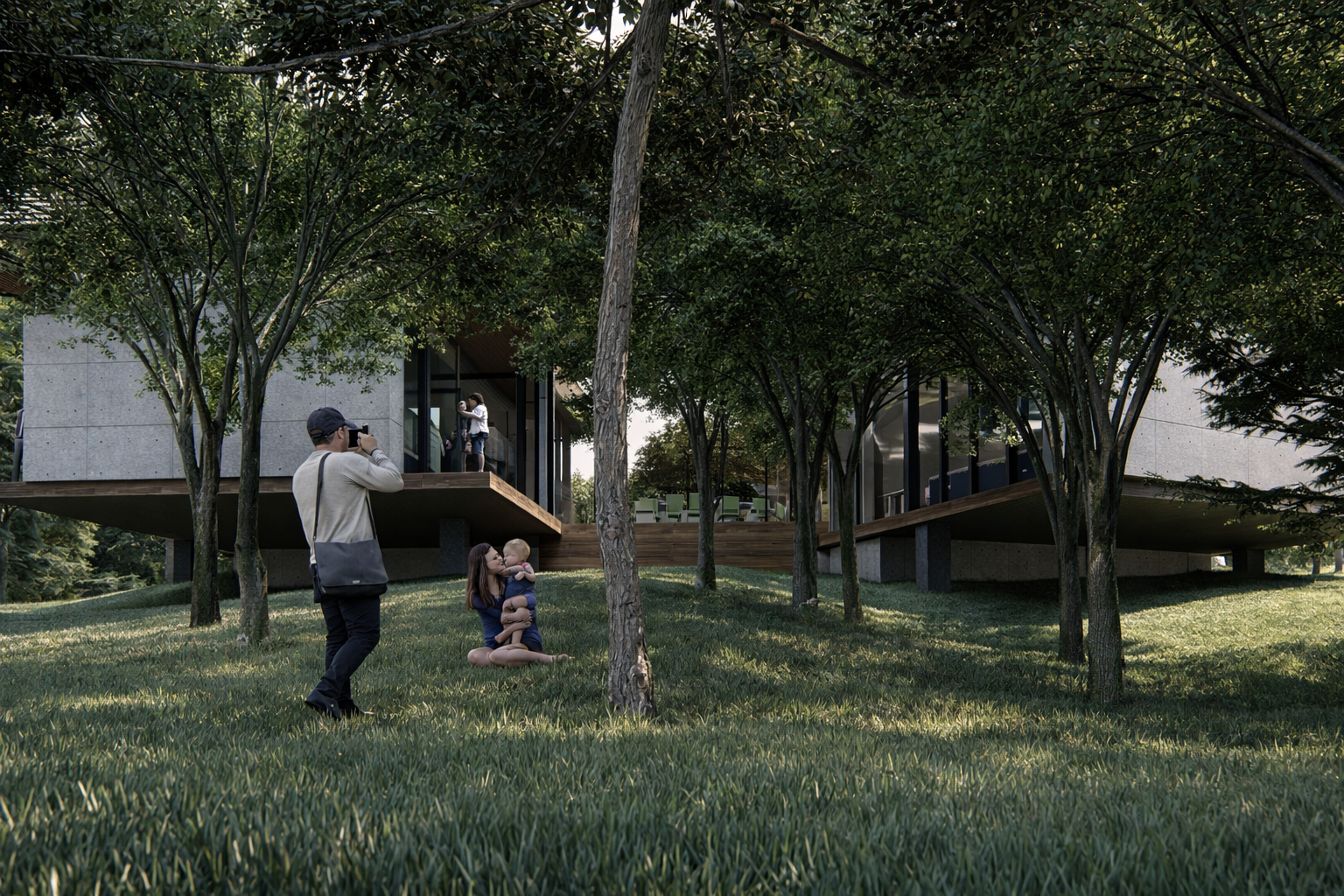
The building is organized across two levels while maintaining the same spatial principles established in the ground floor. Most of the functional program is concentrated on the first level, where administrative offices, workspaces, and service areas are located. The second level is smaller in size and contains fewer functions, allowing the building to maintain a horizontal character rather than becoming vertically dominant. The intention of the design was to preserve a low-rise architectural profile that would adapt to the surrounding environment. Because the site contains extensive green areas, the architects prioritized spreading the building across the landscape rather than stacking its functions vertically. This decision reduces the visual impact of the structure and allows a large portion of the building to remain naturally shaded by the surrounding trees.
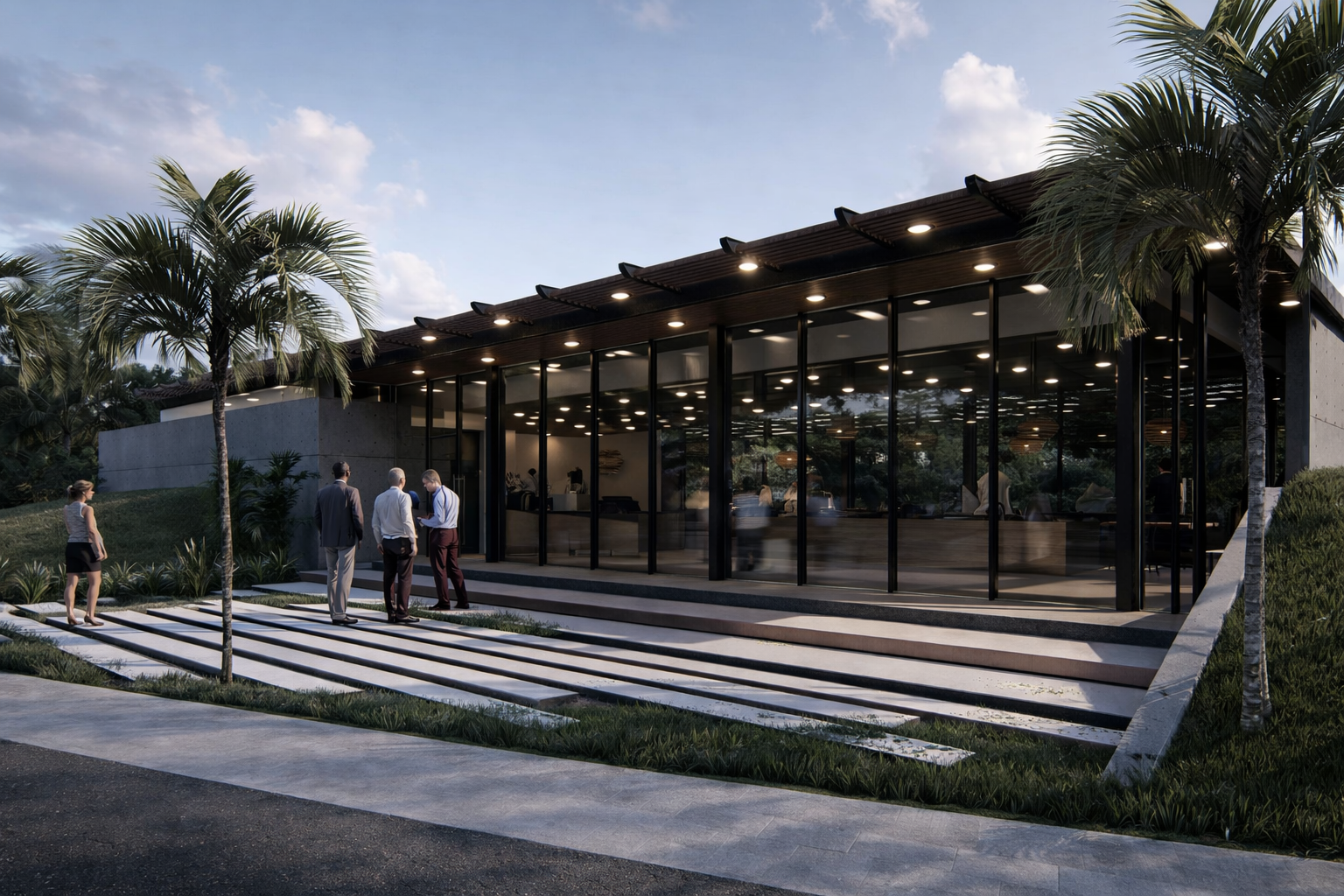
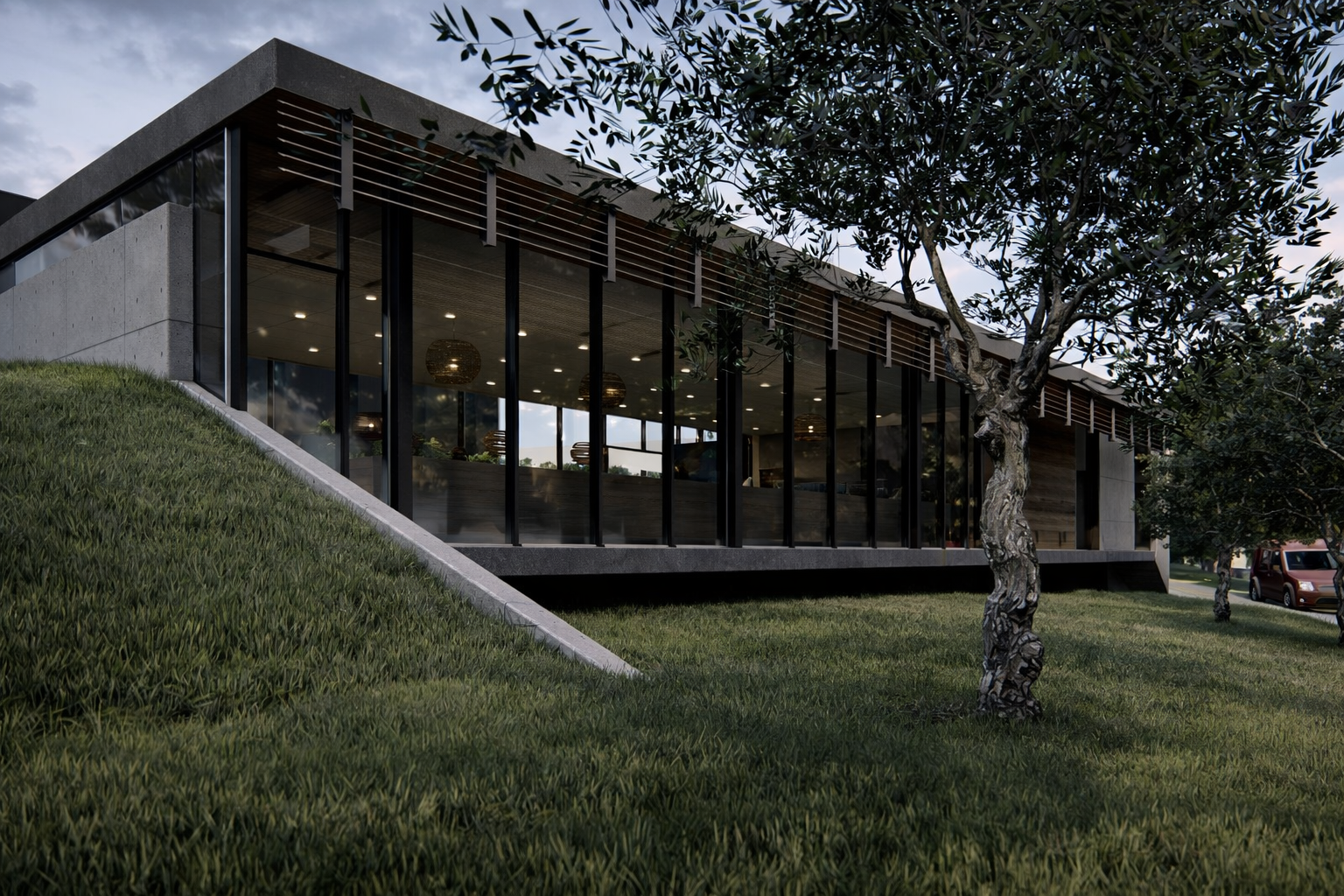
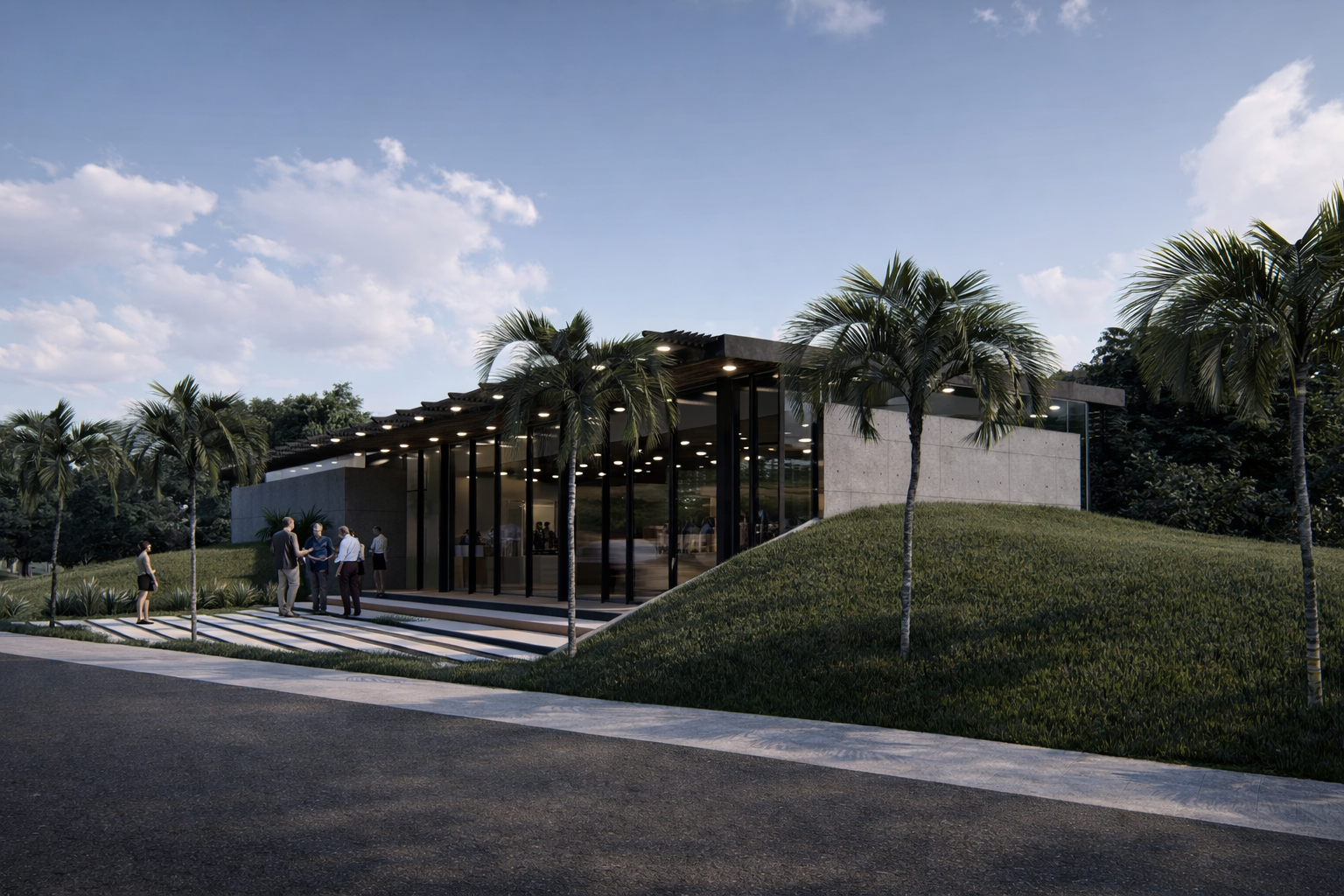
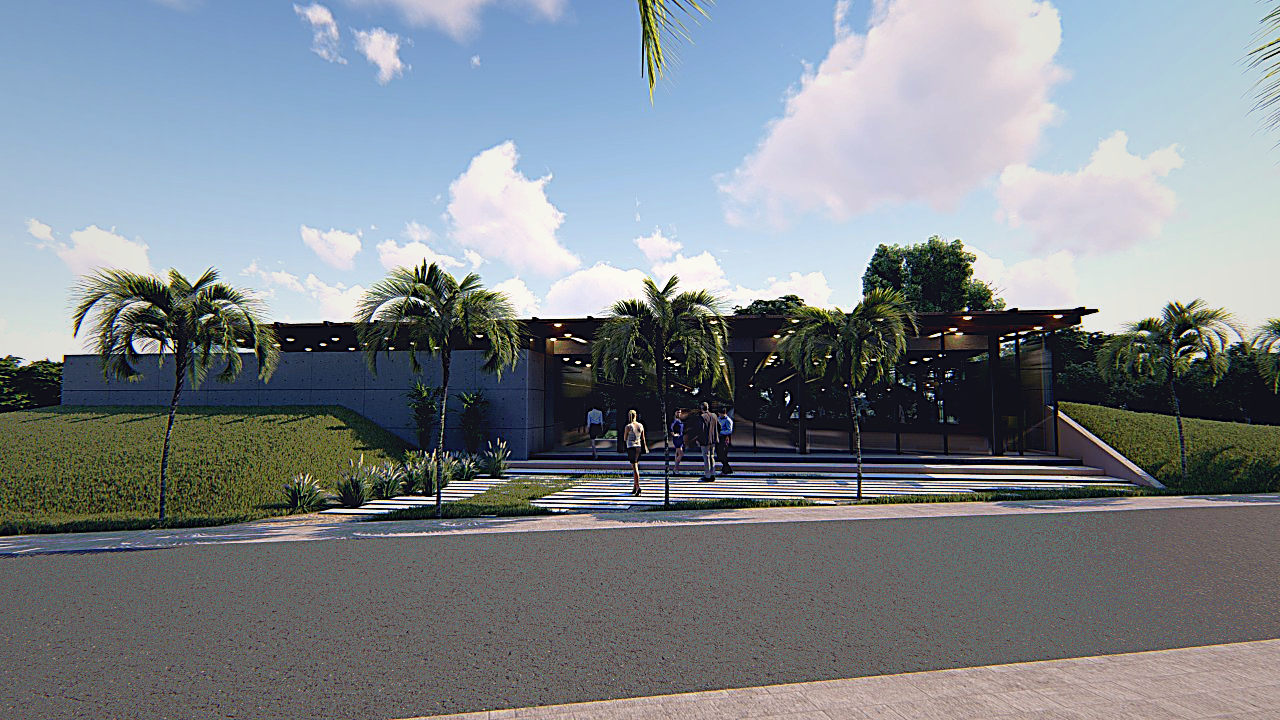
n addition to the administrative office building, the client requested a separate structure dedicated to a dining facility for employees. This second volume, located a short distance from the main building within the same property, functions as an independent block while maintaining the same architectural language. The dining building is even more integrated into the terrain, taking advantage of the natural slopes and level differences of the site. By embedding the structure partially into the landscape, the design strengthens its relationship with the surrounding environment. The project was designed by Fernando Suárez and Natalia Moreno from Quattro Studio Arquitectura, based in Santa Cruz de la Sierra. The overall aesthetic aims to express a contemporary architecture that reflects the identity and vision of the TERBOL company.